Community Asset Pack v1.0 Released
Updated Today
Our first downloadable asset pack includes scalable graphics, web icons, and printable flyers. Perfect for local events, classrooms, or social posts. Available in the Resources section.
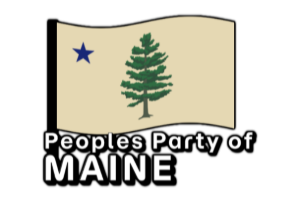
To the 358,912 Mainers who voted YES for the restoration of the 1901 Pine Tree Flag — we thank you. Your support represents more than a ballot choice; it symbolizes courage, unity, and belief in Maine’s distinct identity. Through your votes, you’ve reminded the nation that heritage, simplicity, and nature’s spirit still matter. 🌲✨
Each of you carried forward a century-old vision — one that values community over division, clarity over clutter, and pride over apathy. The pine tree and north star stand not only as symbols of our state but as emblems of hope for generations who believe in civic renewal, design with meaning, and Maine’s independent soul. Your voices echo from Portland to Fort Kent, across islands, forests, and frozen fields — a chorus that says: We see the flag. We stand by the flag. We are Maine.
Though the referendum did not pass, your action marked a turning point in Maine’s civic history. You’ve rekindled conversation, art, and solidarity. The People’s Party of Maine honors every volunteer, every voter, and every citizen who dared to imagine a flag that truly belongs to its people.
This is a citizen information portal. It is not an official government website. Content is provided for educational and advocacy purposes only.
The story of Maine’s Pine Tree Flag is more than a line in design history — it’s a mirror held up to a state’s soul. It traces how a humble green pine and a northern star came to embody independence, resilience, and a fierce love of home. From 1901 to 1909, this flag flew proudly above the Pine Tree State, its simple silhouette cutting through the wind like an idea too bold to fade.
Approved by the Maine Legislature in 1901, it stood apart from the cluttered seals that dominated U.S. state flags of the time. No Latin mottoes, no crests or animals — just a pine and a star on a buff canvas. It was radical in its simplicity, elegant in its honesty, and instantly recognizable. For early Mainers, the flag wasn’t decoration — it was declaration.
Yet in 1909, quietly and without fanfare, the legislature replaced it with a blue banner bearing the state coat of arms. The move was administrative, even mundane — but its cultural effect was enormous. Maine’s distinctive emblem was folded away, replaced by a design nearly identical to dozens of others. The pine retreated to old photographs, attic boxes, and the memories of families who once stitched it by hand.
For decades, the original flag was forgotten — not outlawed, not forbidden, simply buried under sameness. But like the tree it depicts, the idea never died. By the 1970s, historians had rediscovered references in legislative archives. By the 2010s, the revival was unmistakable: artists, makers, and everyday Mainers started to fly the pine again. It appeared on storefronts, mugs, classrooms, and even tattoos. What had been lost was now blooming again — not as nostalgia, but as renewal.
Modern design values clarity, proportion, and storytelling — the Pine Tree Flag has all three. Its composition is minimal, but its meaning is enormous. The pine symbolizes growth, strength, and nature’s endurance; the North Star guides with hope and purpose. Together, they form a visual statement that Maine leads not through power, but through example.
That’s why you see it today — not just in political discourse, but in art studios, classrooms, and family porches. It’s the people’s flag again.
| Year | Event |
|---|---|
| 1820 | Maine becomes the 23rd state of the Union, adopting the pine and star as defining emblems. |
| 1901 | Legislature approves the buff field flag — minimalist, unique, and symbolic. |
| 1909 | Design replaced by the coat of arms on a blue field, aligning with national trends. |
| 1970s | Historians rediscover the 1901 flag in state archives and museum collections. |
| 2010s | Grassroots revival spreads statewide through art, schools, and merchandise. |
| 2024 | Statewide referendum seeks official restoration — narrowly defeated, but reignites public pride. |
| Future | The movement continues — heritage, unity, and design consciousness under one pine and star. |
“Every generation redefines what it means to be from Maine. The Pine Tree Flag is our visual language — it speaks the truth of endurance.”
— Civic Design Journal, 2024
On November 5, 2024, Mainers across the state cast their votes on whether to restore the Pine Tree Flag of 1901. The question was simple, but its implications ran deep — touching heritage, design, and identity.
The official results were close. Though the measure did not pass, the discussion it sparked transformed Maine’s understanding of civic symbolism. 358,912 Mainers voted Yes, rekindling a love for the pine, the star, and what they stand for.
| Choice | Votes | Percent |
|---|---|---|
| Yes | 358,912 | 44.29% |
| No | 451,366 | 55.71% |
Source: Maine Secretary of State — certified 2024 election data.
The referendum’s failure did not end the movement — it amplified it. Communities across Maine now host design workshops, art nights, and civic discussions about the flag’s symbolism. It’s no longer just about a vote, but about rediscovering what makes Maine distinct.
The Pine Tree Flag is both historic and modern — its clean geometry and balanced symbolism make it one of the most adaptable designs in American vexillology. This construction sheet honors the proportions of the 1901 banner while refining its digital and print usability for the twenty-first century.
The flag’s buff field (HEX #EFE8D6) evokes the parchment hues of Maine’s early documents, while the North Star (HEX #0B4A6E) represents steady direction. At its heart stands the evergreen pine (HEX #2E6B3F), stylized for both clarity and strength — a nod to the state’s forestry heritage and its “Pine Tree State” identity.
The Pine Tree Flag revival belongs to everyone. Whether you’re a student, designer, or just a proud Mainer, you can help grow this movement from the roots up. Below are a few ways to participate in shaping Maine’s civic identity.
Join a local design circle or history workshop. Help research original flag sources, record oral histories, or photograph vintage examples from towns across Maine.
Sign UpGather your neighbors, schools, or art classes to discuss what makes a flag timeless. Flag Nights are creative spaces to learn about design, symbolism, and heritage.
See the ToolkitSubmit your digital designs, poster templates, and handouts for others to use in community education. The People’s Party of Maine values open access.
Upload ResourcesThe toolkit provides ready-to-print materials and key points for anyone teaching or promoting the Pine Tree Flag in a respectful, educational way.
Use this for meetups or classrooms:
Advocacy should be kind, factual, and welcoming. Respect differing views. Keep discussions focused on heritage, not hostility. The pine grows tallest when nourished by respect.
Updated Today
Our first downloadable asset pack includes scalable graphics, web icons, and printable flyers. Perfect for local events, classrooms, or social posts. Available in the Resources section.
Ongoing
Flag Nights and community gatherings are growing throughout Maine — from Portland’s art walks to Bangor’s civic centers. These events bring together teachers, historians, and youth leaders to discuss the meaning behind the Pine & Star.
Here you’ll find official and community-made files for use in design, printing, and education. All resources are free for noncommercial civic use.
| Title | Type | Description |
|---|---|---|
| Pine & Star Vector | SVG | Scalable artwork ideal for both digital and textile reproduction. |
| Construction Sheet | Precise proportions, colors, and placement for accurate re-creations. | |
| One-Pager Template | DOCX | Editable outline for workshops, meetups, and classrooms. |
No. This is a community-built project dedicated to education and civic engagement — not affiliated with the State of Maine.
Yes — personal, educational, and noncommercial civic uses are encouraged. For commercial uses, credit “People’s Party of Maine contributors” and maintain design integrity.
Promote fact-based discussion, avoid hostility, and focus on unity. Maine’s story is shared by all its people — under one pine.
Have feedback or questions? Reach out — we’d love to hear from you.
Get occasional, high-signal updates on events, design resources, and education programs. No spam — just pine.
We strive to meet WCAG AA standards for contrast, navigation, and responsiveness. If you encounter accessibility issues, please contact us.